


What Is Smart Lighting?
Smart lighting has become one of the most approachable ways to upgrade a home. It’s often the first step people take into smart home technology because it’s visible and useful. You also get to experience it every day. But what is smart lighting, and how does it work? At its core, smart lighting replaces static, manual lighting with a connected lighting system that gives you more control and comfort. Lights can be dimmed, scheduled, grouped, or controlled remotely. They can respond to motion or adjust automatically. If you prefer it, they can even be triggered with a simple voice command. This lets you ensure your home's lighting is always perfect for the time of day or activity you're doing. Smart lighting is not about flashy features. It’s about better light, used more intentionally, in every part of the home.
Who It’s For
- Homeowners curious about what smart lighting is and how it works
- Anyone considering smart home lighting for a renovation or new build
- People upgrading from traditional light switches and incandescent bulbs
- Homeowners looking to save energy and reduce energy consumption
- Those exploring smart home devices and connected lighting systems
- Anyone who wants easier control of all the lights in their home
Key Takeaways
- Smart lighting uses connected devices like smart bulbs, smart switches, and sensors to control home lighting
- Most smart lighting systems connect through a home’s wi fi network or a smart hub
- Smart light bulbs and smart LED lights offer dimming, colour changing, and warm white or cool white options
- Smart lighting can be controlled with smartphone apps, remote control, physical switches, or voice commands
- Automation allows lights to automatically turn on, dim, or adjust based on motion, time, or routines
- Smart lighting improves convenience, energy efficiency, and enhanced security across the home
- A well-designed lighting system works seamlessly with other smart home devices and platforms
What Is Smart Lighting?
Smart lighting refers to lighting devices that connect to a network and can be controlled digitally rather than only through traditional light switches. This includes smart light bulbs, smart switches, smart LED lights, strip lights, outdoor lights, and fully integrated smart lighting systems.
Instead of flipping a single wall switch to control one light fixture, smart lighting allows you to:
- Control multiple smart lights at once
- Adjust brightness and white light temperature
- Change light colours or use RGB lights where appropriate
- Turn lights on or off remotely
- Automate how and when lights turn on
Most smart lighting products connect via Wi-Fi or Bluetooth. Some have a smart hub that connects lighting devices.
How Smart Lighting Works
Understanding smart lighting starts with how the system is built. A smart lighting system typically includes several components working together.
Smart light bulbs replace standard light bulbs in existing fixtures. These bulbs contain wireless technology and LED components, allowing them to dim or be controlled remotely.
Smart switches and smart light switches replace or work alongside traditional light switches. Instead of cutting power directly to the light, they communicate with the lighting system, allowing more advanced control while still offering a familiar physical switch.
Smart hubs act as a central connection point for many smart lights and other smart home devices. Some systems rely entirely on a hub, while others connect directly to a home’s wi fi network.
Smart sensors, such as motion sensors, detect movement or occupancy and automatically turn lights on or off.
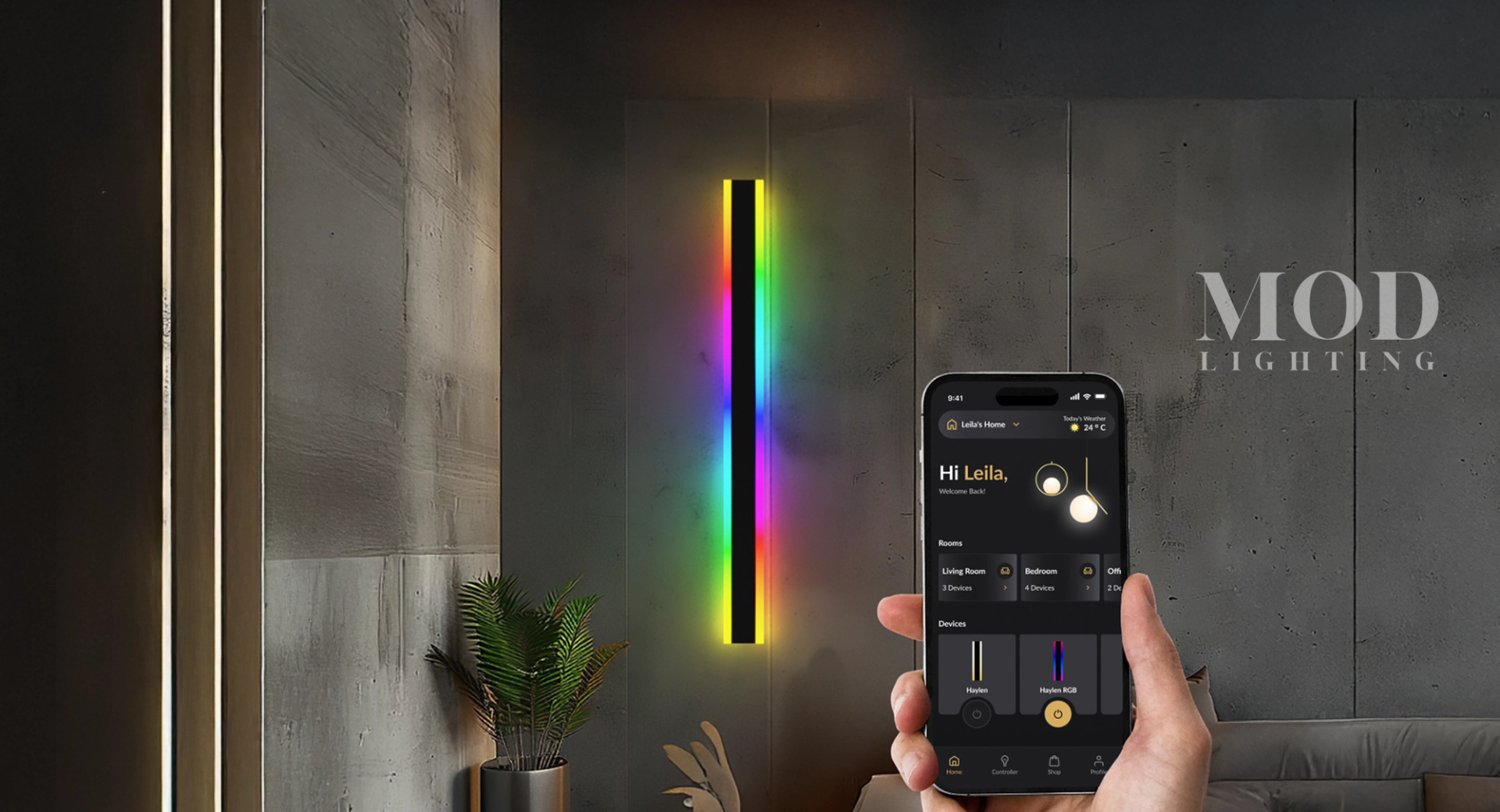
Smartphone apps and a manufacturer’s app let you control lights remotely, create schedules, and adjust settings from your mobile device.
Together, these elements form a connected lighting system that feels responsive instead of rigid.
Smart Lighting vs Traditional Lighting
Traditional lighting is simple but limited. A wall switch controls one circuit. Lights are either on or off; dimming is only possible with a compatible dimmer installed. Incandescent bulbs and older LED lights offer little flexibility.
Smart lighting changes this entirely.
With smart lighting:
- A single switch can control multiple lights
- Lights can be grouped by room, zone, or purpose
- Brightness and colour temperature can be adjusted independently
- Lights can be controlled remotely or automatically
Instead of walking through the house to turn off all the lights, a single command or tap can control all the lights at once.
Types of Smart Lighting Products
There are many smart lighting products available, and most homes use a mix rather than just one type.
Smart light bulbs
These are the most common entry points. Smart bulbs screw into existing fixtures and can be controlled without rewiring. Many smart bulbs offer warm white or cool white options. Many often offer color-changing options.
Smart LED lights
Smart LED lights use light-emitting diode technology for energy-efficient performance and long life. They often include advanced dimming capabilities and better color consistency.
Strip lights
Strip lights are flexible smart lighting devices often used for accent lighting, under cabinets, shelving, or architectural details. They add depth without overpowering a space.
Smart switches
Smart switches give physical control while still enabling automation and remote access. They’re ideal for controlling multiple smart lights or fixtures on a single circuit.
Outdoor lights
Smart outdoor lights improve both convenience and enhanced security. Path lights and porch light fixtures can be scheduled or motion-activated.
How Smart Lighting Fits Into Smart Home Lighting
Smart home lighting is most effective when it works alongside other smart home devices. Smart lighting systems often integrate with:
- Smart speakers for voice control
- Security systems for enhanced safety
- Smart sensors and motion sensors
- Smart thermostats and other connected devices
For example, when a security system is armed at night, lights can automatically adjust. When motion is detected near the front door, outdoor lights can turn on. When you leave home, the lights can turn off automatically.
This integration is what turns smart lighting into a true smart home experience.
Voice Control and Remote Access
One of the most popular features of smart lighting is voice control. Using a smart speaker, homeowners can control lights with simple voice commands, such as turning them on and dimming brightness.
A remote control is equally valuable. Lights can be controlled remotely through smartphone apps, whether you’re in another room or away from home. This adds convenience and improves security by making it appear that someone is home. Smart lighting allows lights to be remotely controlled without relying solely on physical switches.
Automation and Scheduling
Automation is where smart lighting quietly improves daily life. Instead of reacting to lighting needs, the system anticipates them.
Lights can:
- Automatically turn on at sunset
- Automatically adjust brightness throughout the day
- Turn off after a set time using timers
- Respond to motion sensors in hallways or bathrooms
This reduces energy consumption and removes small daily tasks that add up over time.
Energy Efficiency and Cost Savings
Smart lighting is inherently energy efficient, especially when paired with smart LED lights. LED lights use significantly less power than incandescent bulbs and last much longer.
Scheduling automation and motion sensors further reduce energy consumption by ensuring lights are only on when needed. Over time, this helps homeowners save energy and lower costs without sacrificing comfort or ambiance.
Controlling Multiple Lights with Ease
One of the biggest benefits of smart lighting is the ability to control multiple lights together. Instead of adjusting each light individually, you can group lights by room or zone and control multiple smart lights with one switch. This lets you set scenes that adjust all the lights at once, making it easier to manage home lighting as a whole rather than as individual fixtures.
Is Smart Lighting Right for Every Home?
Most smart lighting products are designed to be accessible and scalable. You can start with a single smart light bulb or gradually build a full smart lighting system over time.
Smart lighting works well in:
- New builds and renovations
- Existing homes with minimal changes
- Apartments or rental spaces using smart bulbs
- Homes planning long-term smart home systems
The setup process varies by product, but most systems are designed to be user-friendly and expandable.
A Smarter Way to Think About Light
So, what is smart lighting? At its core, it's lighting that adapts to how you live. It’s not about replacing good lighting design with a cool, new technology; it's about enhancing it.
When smart lighting is thoughtfully implemented, it feels natural because lights respond when you need them, and spaces feel warmer and more intentional. Ultimately, control becomes easier, not more complicated.
Smart lighting is ultimately about creating better experiences with light, one room at a time. If you’re looking for lighting options that fit perfectly in a smart system, MOD Lighting can help with that.